Urban Soil Lab
New York, NY
Year | 2011
Type | Research by Design
Phase | Concept
Size | 300m²
Category | Design, Fabrication
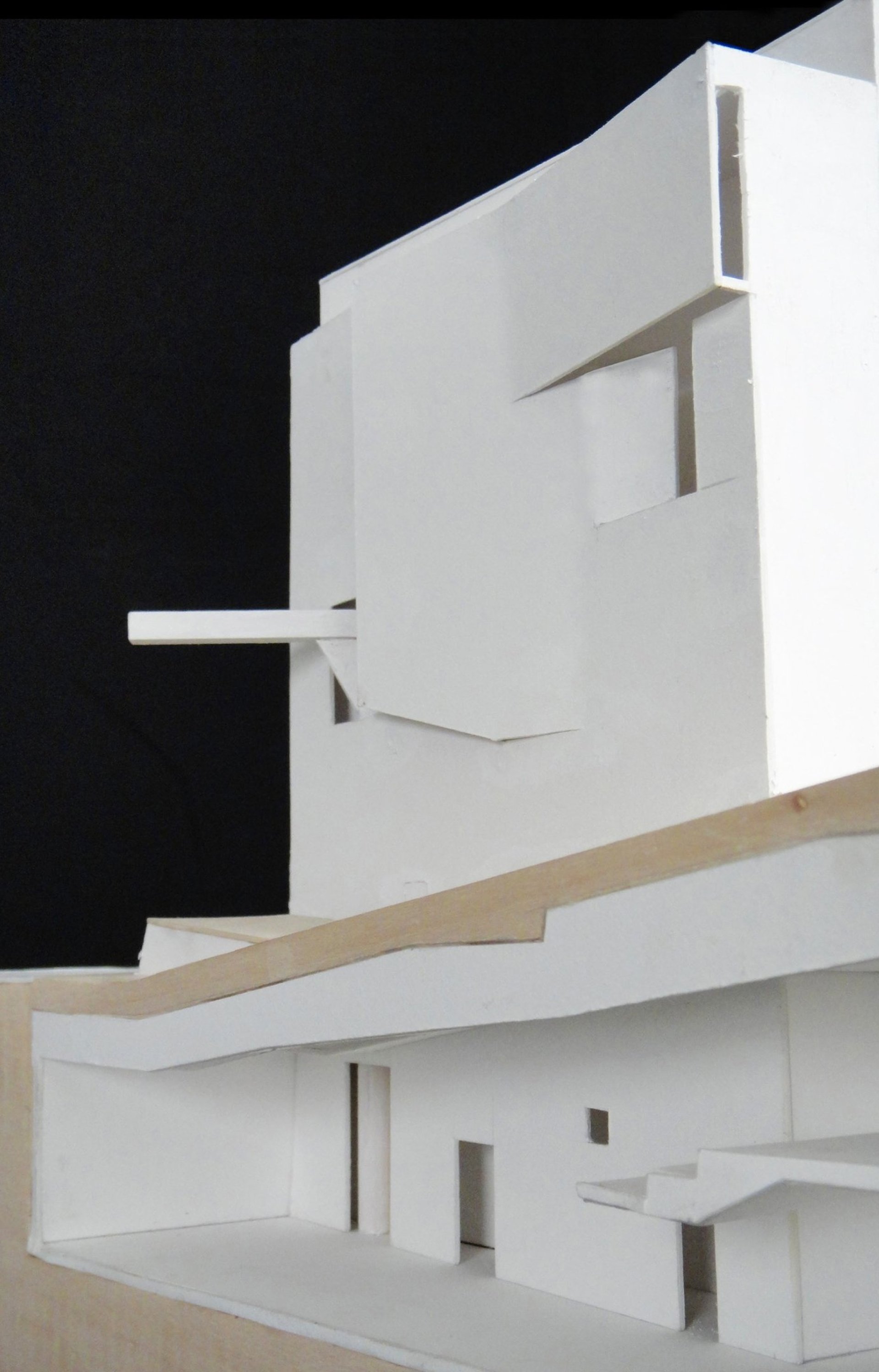
The Urban Soil Lab is a composting facility and a park.
It is a play of hidden and revealed infrastructure questioning ideas of “natural” and “artificial” in the urban environment.
The Context:
Over the last century, New York City has built its infrastructure to improve its living conditions. Subways, sewage, and electricity are hidden underground, trash is collected by night and shipped to landfills in Pennsylvania, meat is processed in Kansas only to be presented on supermarket shelves. People are disconnected from the activities that run the city smoothly.
A park is often perceived as natural, but is a man-made area with as much human input as any other infrastructure.
Composting happens naturally within the soil, but when industrially managed the process is accelerated to keep up with waste production.
On the other hand, traffic, which is usually perceived as un-natural, when viewed from a distance displays similar behaviors as what is observed in the natural world, like a colony of ants or a herd of cattle.
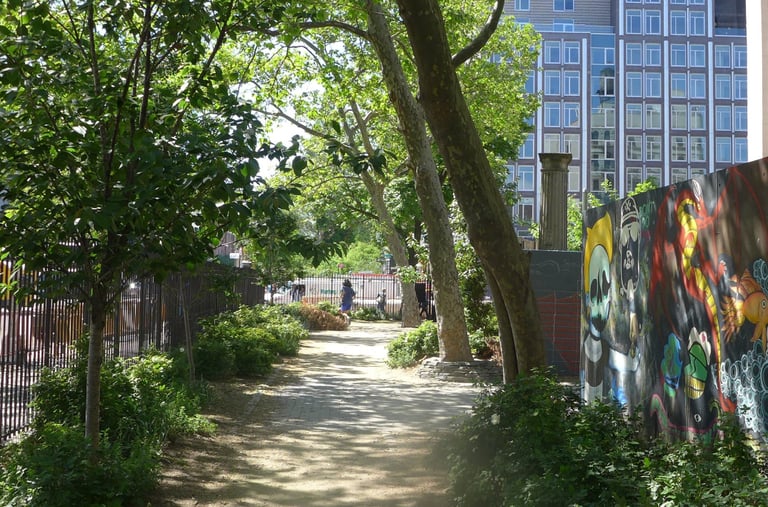
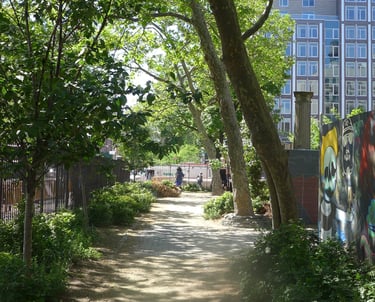
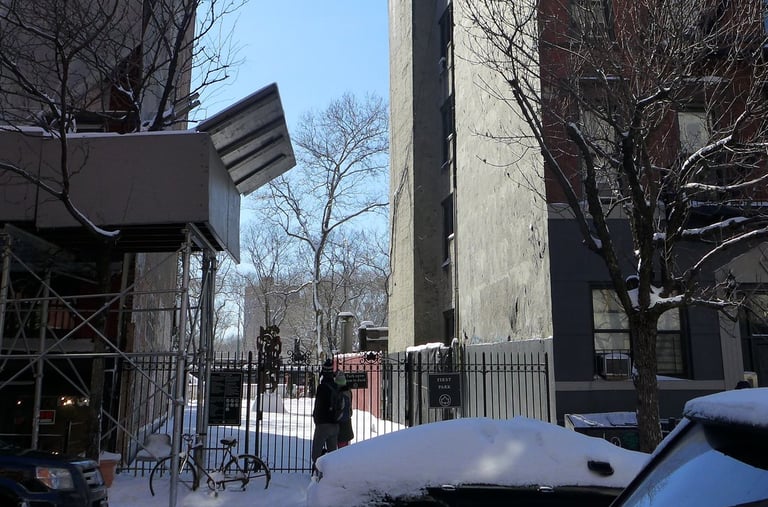
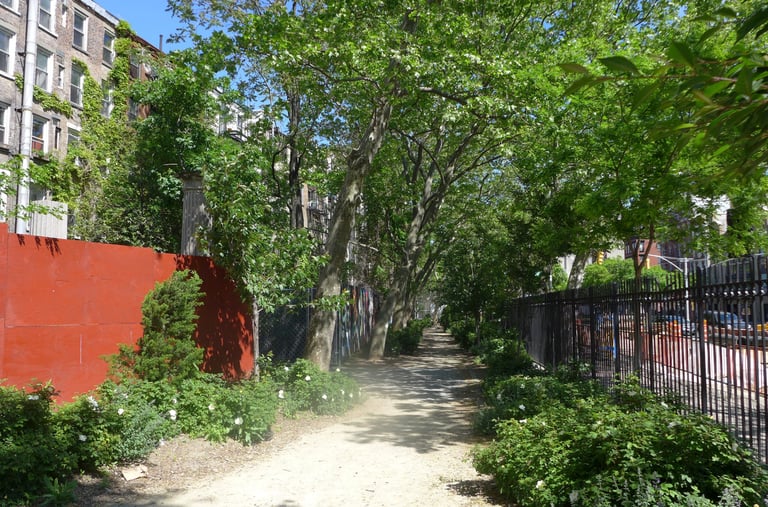
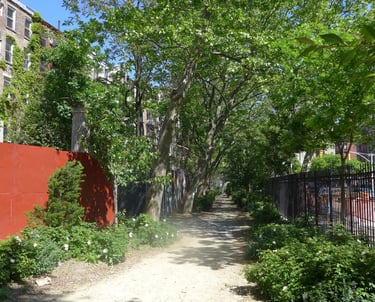
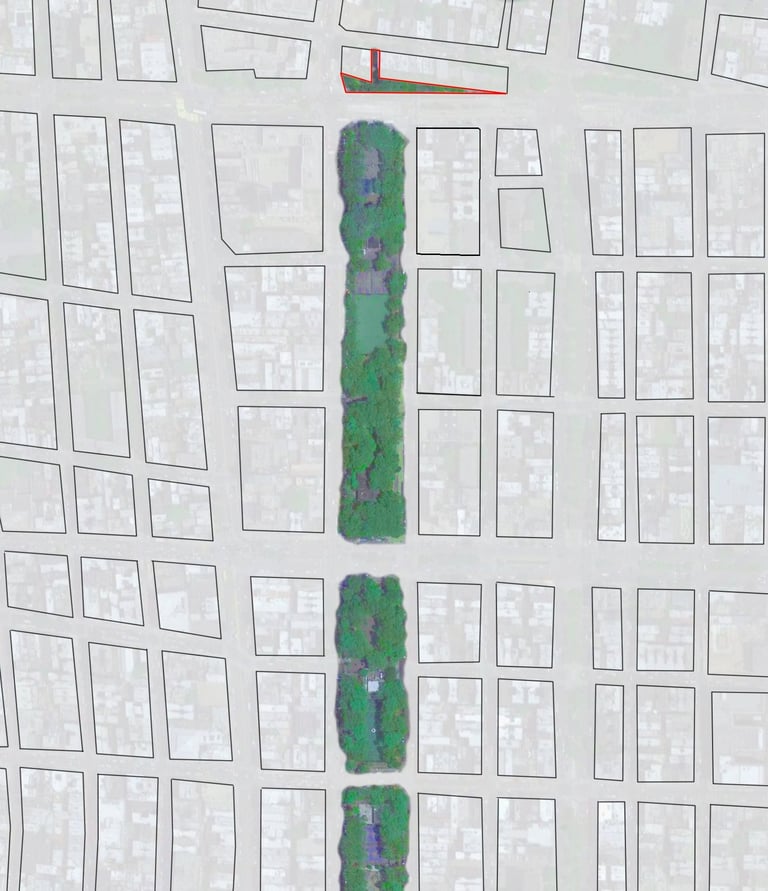
The project is located on a voided lot between 1st street and Houston Street.
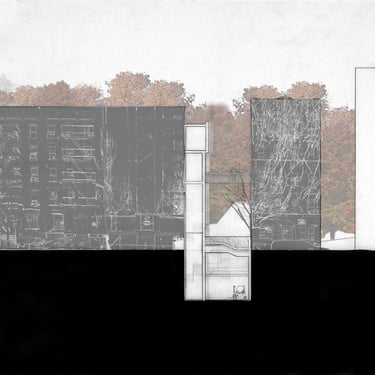
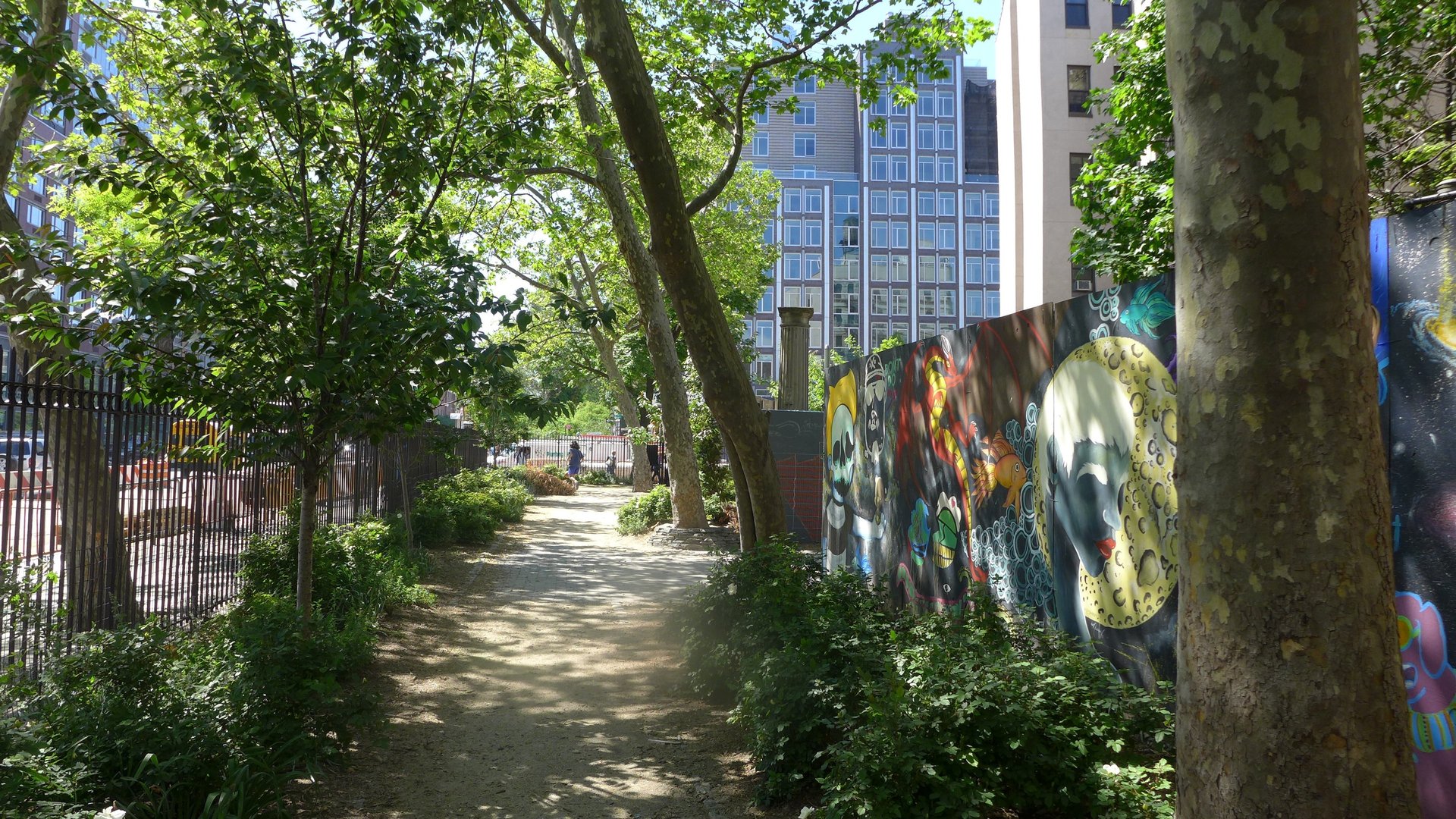
When Houston street in Manhattan was widened to make more space for vehicular traffic, en entire housing block between Houston and 1st street was left scared: the inner utilitarian facades suddenly became the main southern face of the houses, while the backyards were transformed in a linear green buffer between Houston street traffic and the residential buildings.
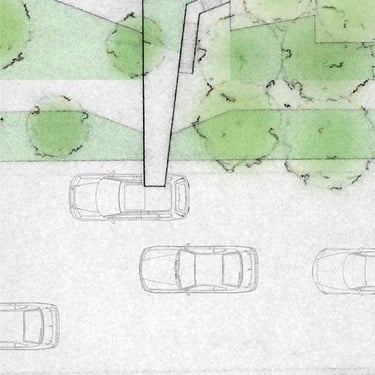
The green buffer is the natural ending point of Sara Roosevelt Park, a linear park at the edge of Chinatown that extends all the way to Canal Street.
The site:
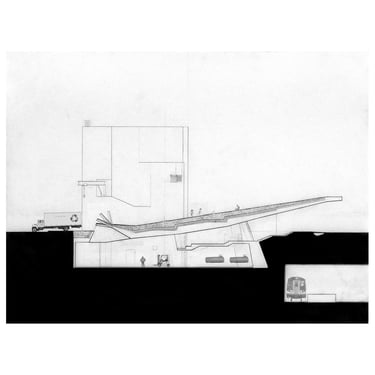
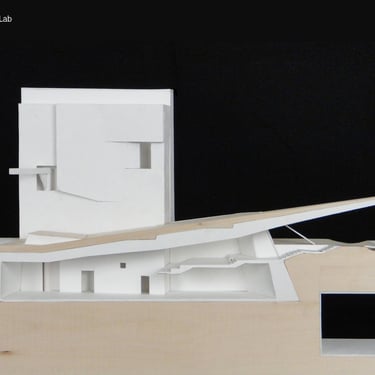
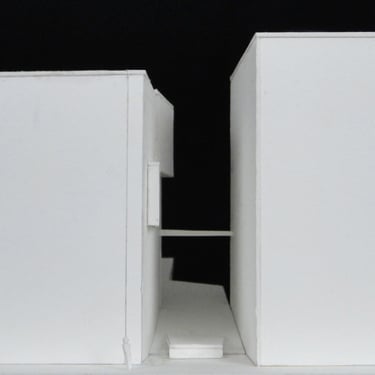
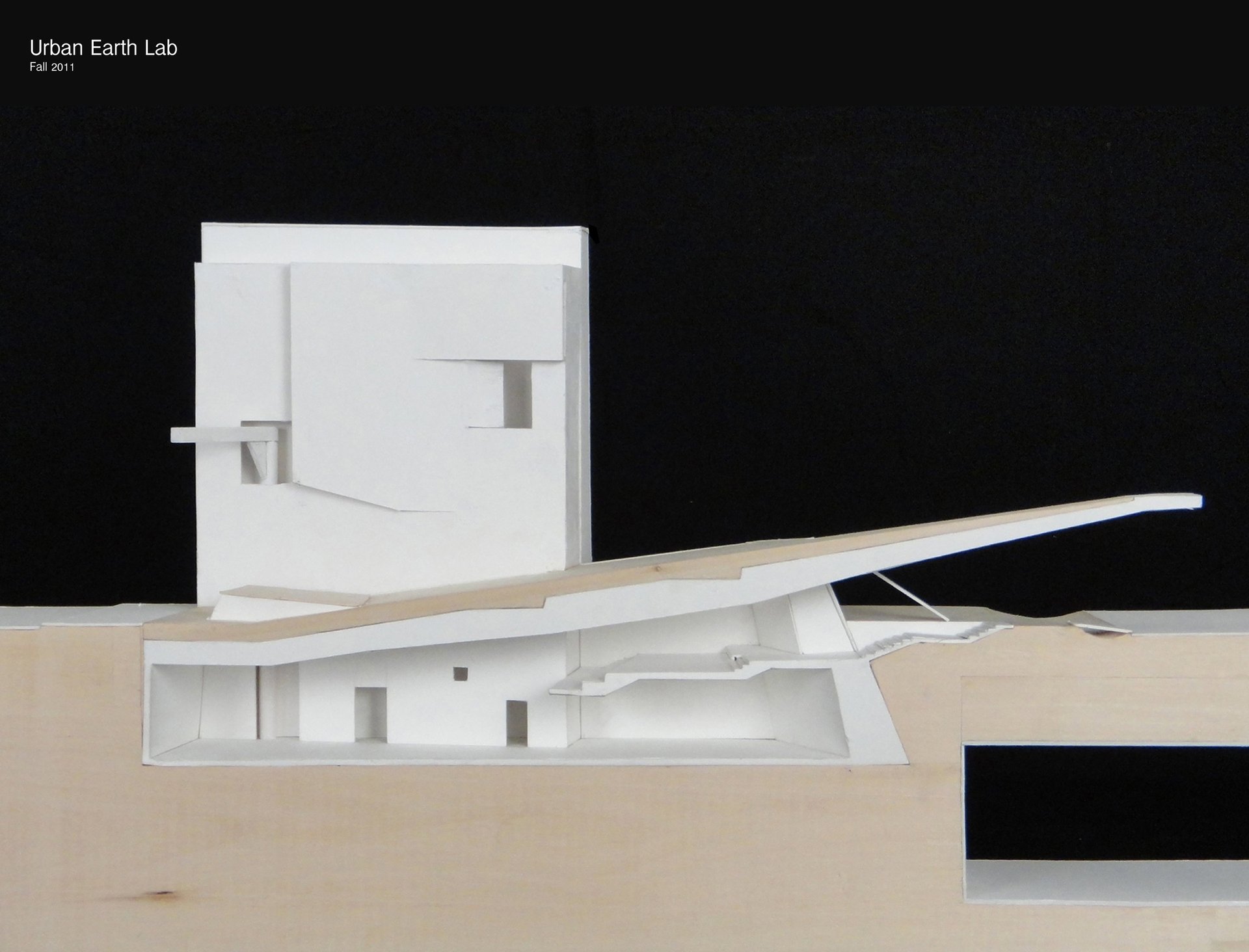
The design maintains the void in the lot to connect visually 1st Street to Sara Roosevelt Park. The inflection of the ground, a roof-park, frames an idyllic view of the park hiding the traffic, At the same time, it creates an opening the underground on the other facade.
From here one accesses the compost facility, which is quite literally placed where the biodegrading process would naturally occur: in the ground - in this case, though, it's an industrial process.
Waste is hoisted with a crane to the lower level.
The facility invites visitors to its mezzanine to look over the operations and learn about this infrastructure. A Visitor center informs about the composting process and healthy soils. The compost produced is later used for the maintenance of New York City parks.
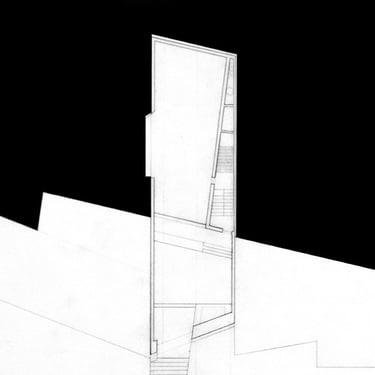
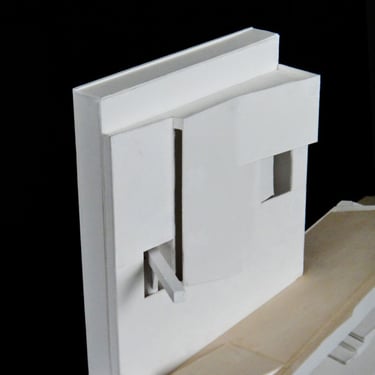
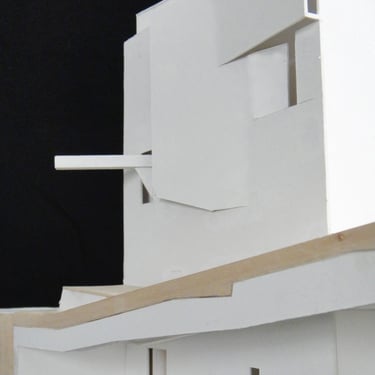
The slender building houses an administrative office and a control room for the stage which makes the sloped park into an informal open-air theater.
Walking on the protruding deck of the roof-park reveals Houston St. traffic from a detached perspective from above.
The design: