Ghosts of Enlightment
New York, NY
“Now let us, by a flight of the imagination, suppose that Rome is not a human habitation but a psychical entity with a similarly long and copious past -- an entity, that is to say, in which nothing that has once come into existence will have passed away and all the earlier phases of development continue to exist alongside the later one.”
- Sigmund Freud
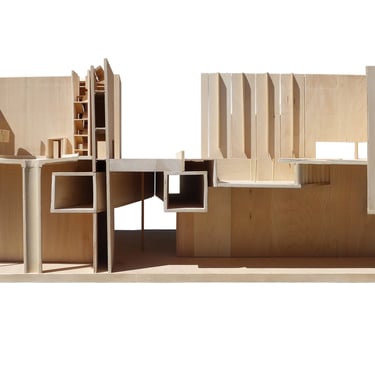
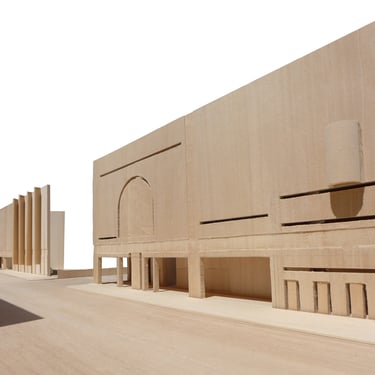
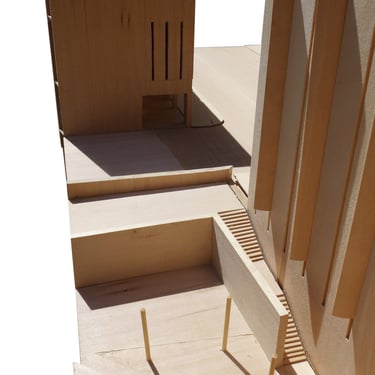
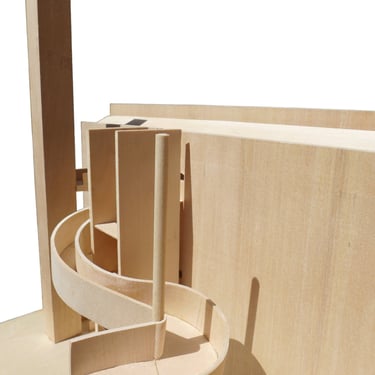
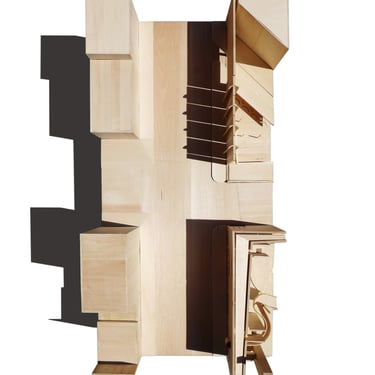
“Ghosts of Enlightment” reestablishes the predominance of the Bowery as a cultural avenue by reinterpreting past institutions that occupied the site in the current urban setting: a slaughterhouse, a micro-credit institute, YouTube servers, and a public bathroom.
Year | 2013
Type | Research by Design
Phase | Concept
Size | 5000m²
Category | Design, Fabrication
The Context:
New York is a city of extremes.
These extremes corroborate our lives.
In an attempt to hide its most inconvenient realities,
the city is buffering down to discreteness and mediocrity.
Anonymous luxury condos are rising
from Gowanus, to Long Island City, and the Meatpacking district.
New York is been sterilized.
Its creative energy can’t produce, or reproduce.
New York is transforming into a homogenous city
that rejects its diversity, idiosyncrasies and eclecticism.
Diversity is unpredictable.
Idiosyncrasy is not efficient.
Eclecticism is uncomfortable.
Comfort is overrated.
The site:
The Bowery is the most ancient road of Manhattan island: its trace follows the original indian north-south route of island.
In the eighteenth century, the area around what is now Canal Street marked the entrance to the urban settlement of New York for fur traders and cattle farmers. Here, the Bowery switched from a rural route to an urban street.
Over the course of the centuries, with the the construction of Canal Street, the Manhattan Bridge, and the consequent demolition of many blocks, the Bowery lost importance, and the intersection with Canal shows a change in axis dominance from North-South to East-West. From an focal point of the city's institutions, this intersection became a mere infrastructural solution to a traffic problem.
Analysis:

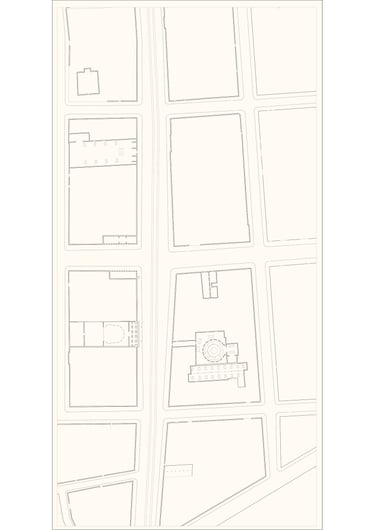
1776
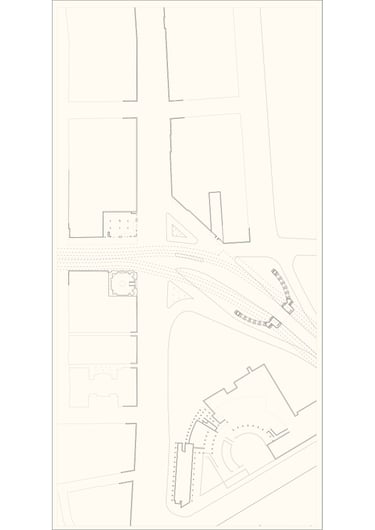
The Bowery is a dominant route towards the fur traders, the cattle farmers of the North of the Island.
Here, marked by the Bull's Head Tavern and its stockyards, the Bowery switches from a rural route to an urban street.
1857
The Bowery establishes as a cultural axis lined with Theaters and other cultural institutions.
1916
The elevated train on The Manhattan bridge, with its majestic neo-baroque gateway, lands into the the neighborhood. is well served by transportation, but the canal is generally 900m away from any subway stop.
2013
The noise and sounds from around the Gowanus, such as the elevated subway, the loading of scrap metal on barges, traffic, as recorded from experience and observation
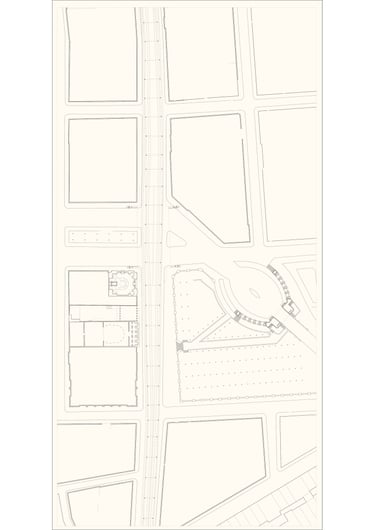
The shift in axis first occurred underground with the introduction of the subway. The presence of the elevated train, though, maintained the Bowery as the prominent axis. Successively, the demolition of the el train and the enlargement of Canal Street.
At the intersection, the pragmatic boulevard of Canal Street cut through the cultural Roman Via and undermining the support of the city in this area. The city is not supported by the Bowery anymore.
Canal Street is a "Boulevard": a negative cut-out, derived from a demolition within the urban fabric. The street started out as a literal canal from Collect Pond to the Hudson. Two major demolitions sliced through the urban fabric to enlarge Canal Street. Its origin is a destructive act, a removal of something to allow for new infrastructure. With the introduction of the Manhattan Bridge and the Holland tunnel to the West, Canal Street broke the supporting structure of the Bowery, and created a "zone without" that is not supported.
The morphological analysis of the intersection of Bowery and Canal revealed two different understandings of "street".
The Bowery, is a "Via", in the roman sense: a connecting line between the north rural and indian territories and the Dutch colony. It is a positive figure which cuts diagonally through the fabric of the island, and provided the supporting structure for the northward expansion on New York.
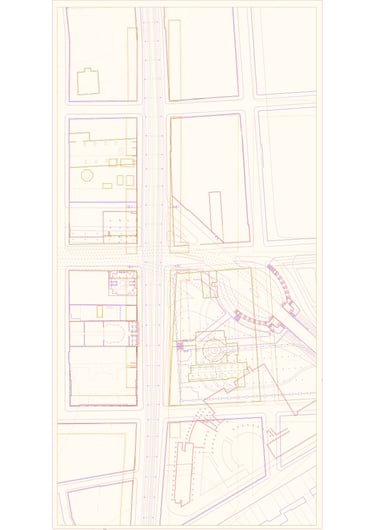
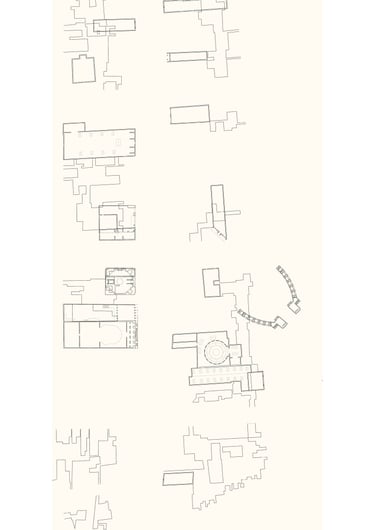
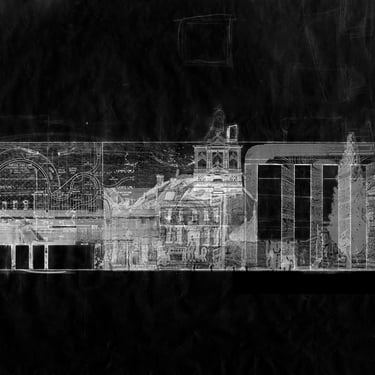
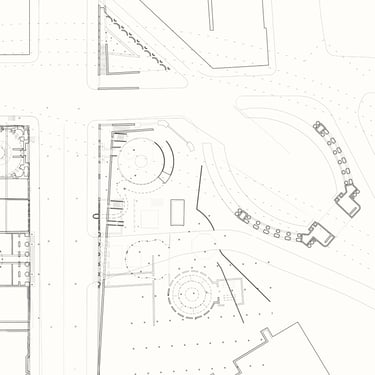
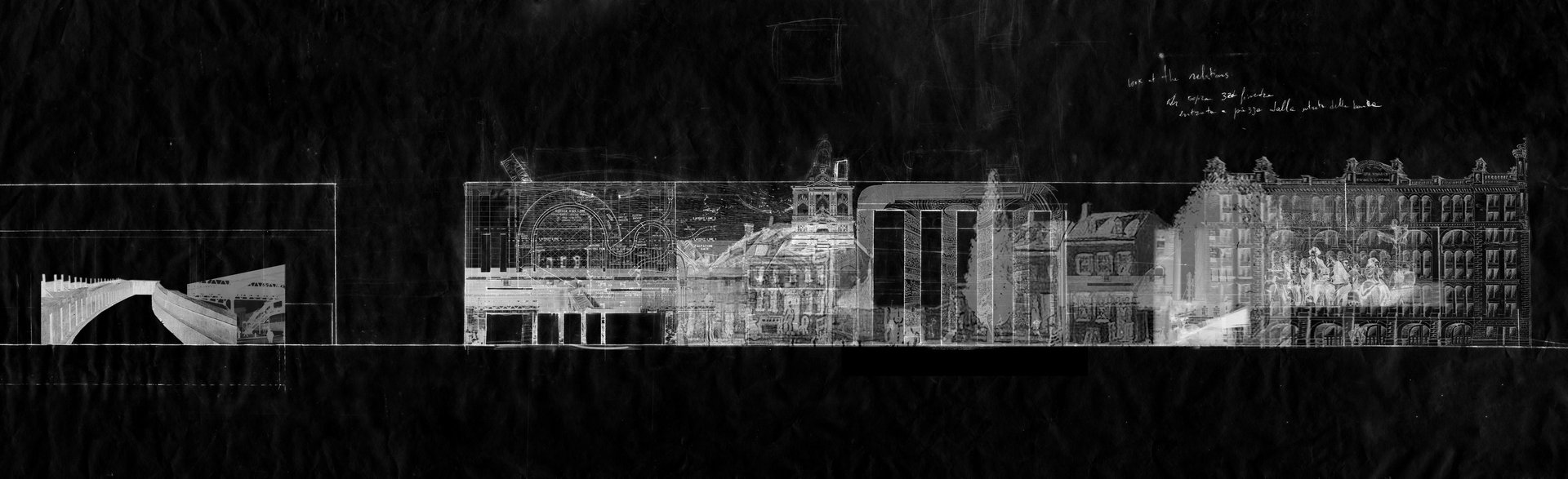
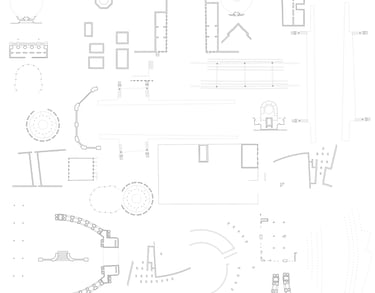
Palimpsest of the History of the Bowery
Overlay of cultural institutions, public and semi-public space throughout time
The design:
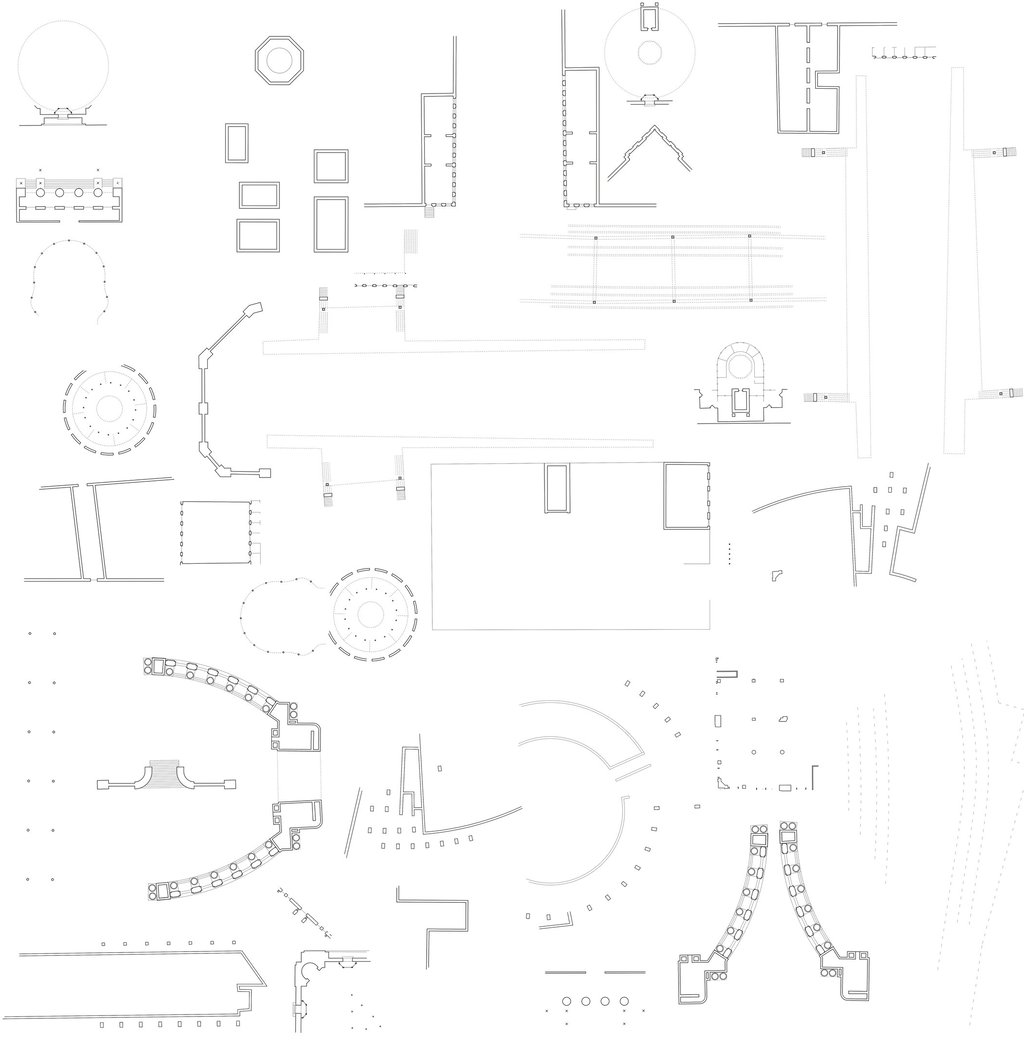
The lack of structure of this no-man’s-land calls for a new support to re-establish the intersection as a vital crossing point of New York.
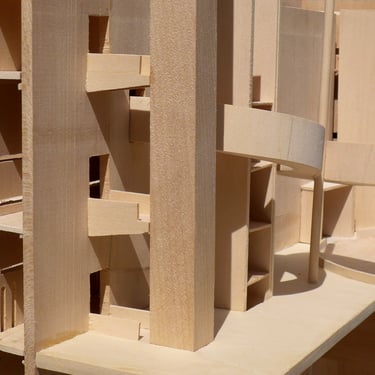
The project is directed to an architecture that addresses the city as a spatial and a temporal field of still life, a civic spatial construct integrating art, humanist program, and the architect’s author’s hypothesis of the authentic civic memory embodied by the Bowery.
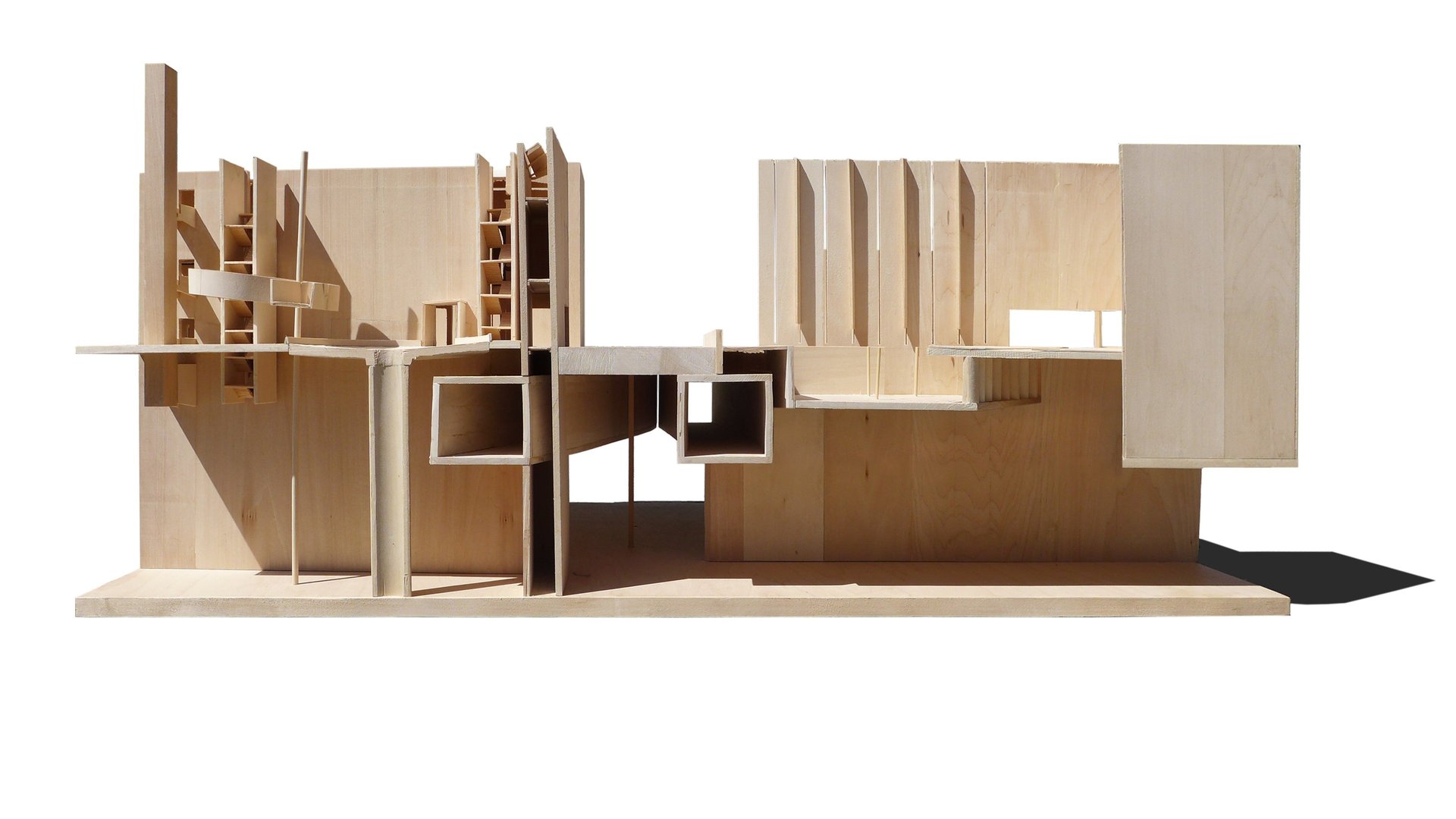
“Ghosts of Enlightment” reestablishes the predominance of the Bowery as a cultural avenue by reinterpreting past institutions that occupied the site in the current urban setting: a slaughterhouse, a micro-credit institute, YouTube servers, and a public bathroom.
YouTube servers - much of the entertainment industry now happens on-line. The times of freak-shows and vaudeville on the Bowery are over. Theaters and cinemas are struggling and closing down; YouTube is the modern theater.
Public Bathroom - In New York they do not exist anymore. Public officials are ashamed of our bodily needs. Let us raise a temple to our first creative act.
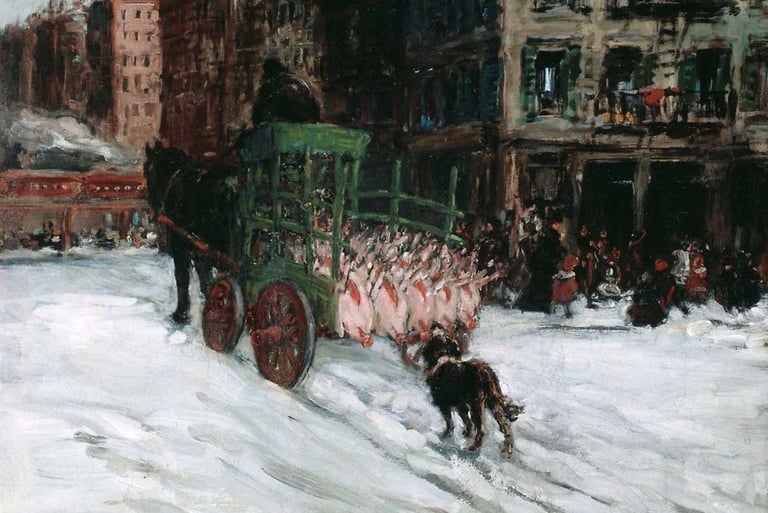
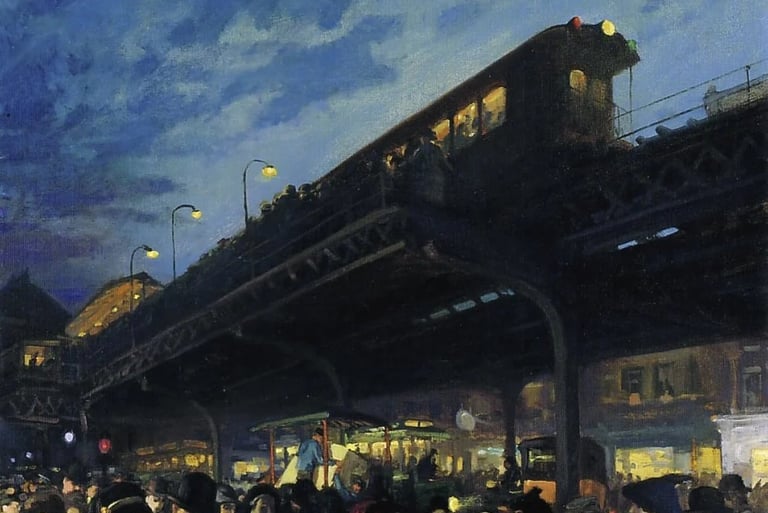
The Artists of the Ashcan School became the inspiration for this project. This group of artists frequented and depicted the area in the early 1900, and included George Bellows, John Sloan, Robert Henri, and Gladens.
Slaughterhouse - in the city it’s not pragmatic nor efficient; it’s existential. We have been increasingly detached from the processes that guarantee our food. Everyone should experience killing their own meat. A slaughterhouse in the city is an uncomfortable service to the people. It’s a visceral and cathartic experience, to confront death.
Micro-credit institution - In the world capital of finance, low-income entrepreneurs are often overlooked. Examples around the world have shown how empowering and lucrative this investment banking can become.
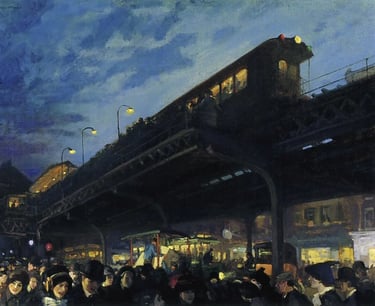
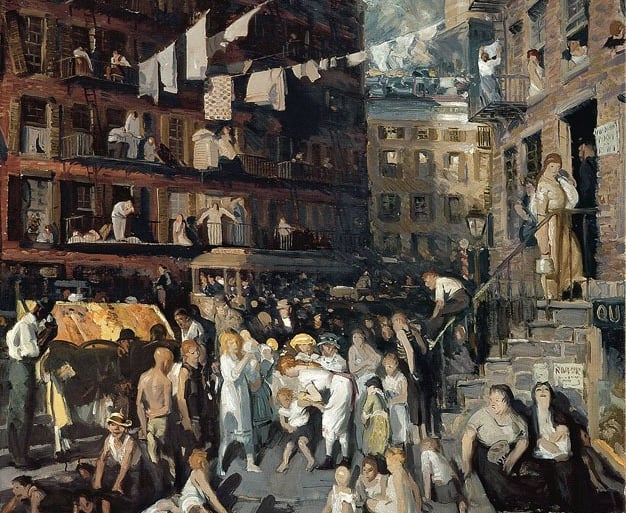
"It takes more than love of art to see character and meaning and even beauty in a crowd of east side children tagging after a piano or hanging over garbage cans.”
Robert Henri
The Ashcan School emphasizes the energy of multiple layers of human interaction. Through their paintings they have exposed acts that had never been seen by the upper class New Yorkers.
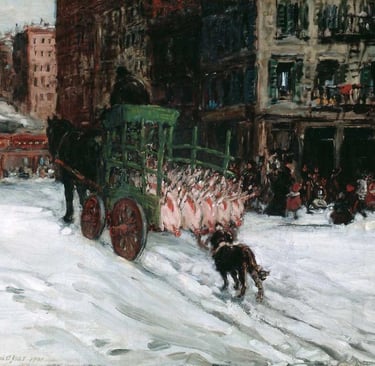
The Butcher Cart by George Luks. 1901
Cliff Dwellers by George Bellows. 1913
Six o'clock Winter by John Sloan. 1912
For the first time they depicted and exposed the grittiness of the urchins, the prostitutes, the alcoholics, the butchered pigs, the boxing matches of the low-down Downton to the Uptight uptown New Yorkers.