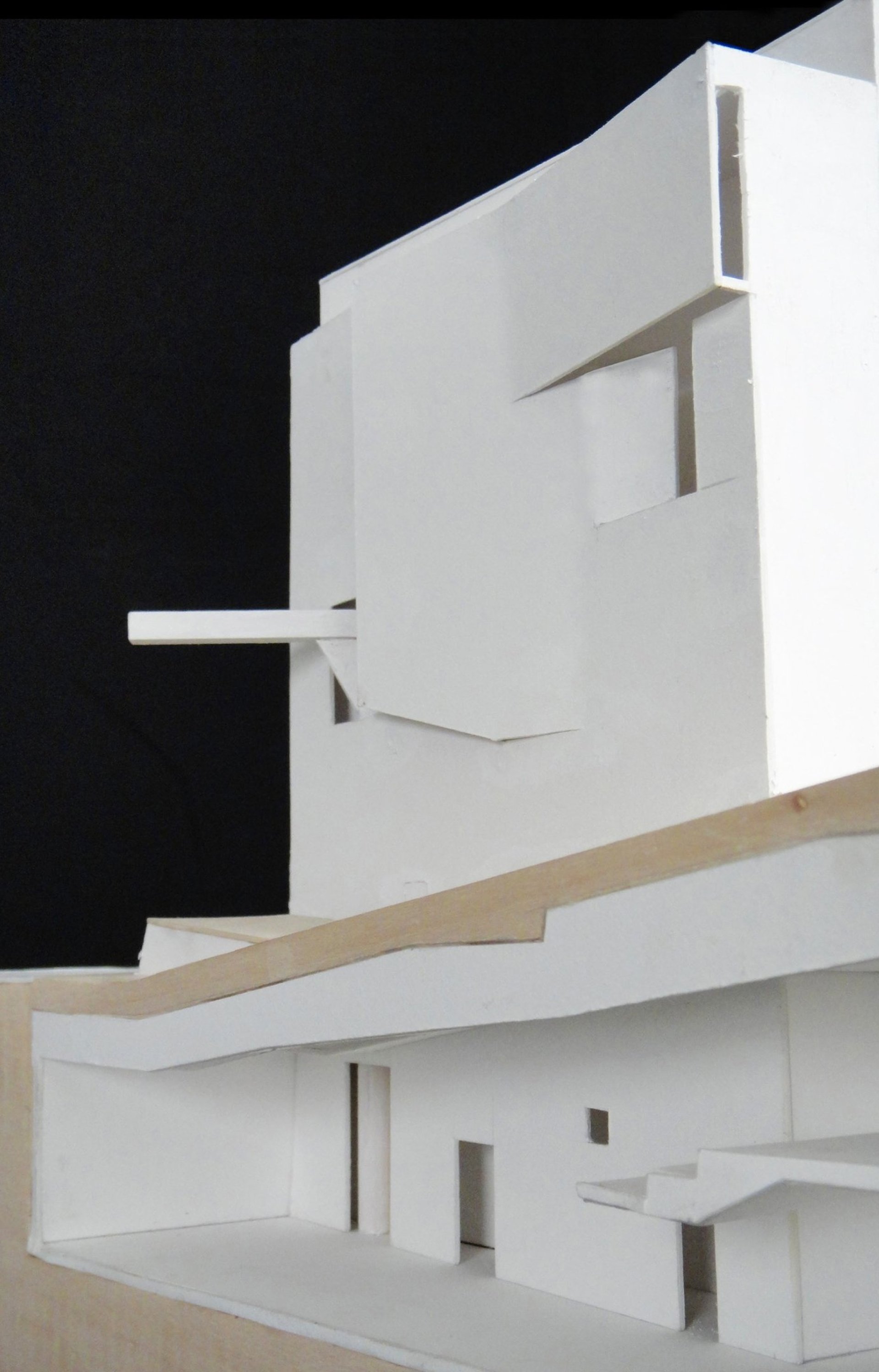
Gowanus Algal Park
Brooklyn, NY
Year | 2012
Type | Strategic Planning
Phase | Concept
Size | 180ha
Category | Design, Fabrication
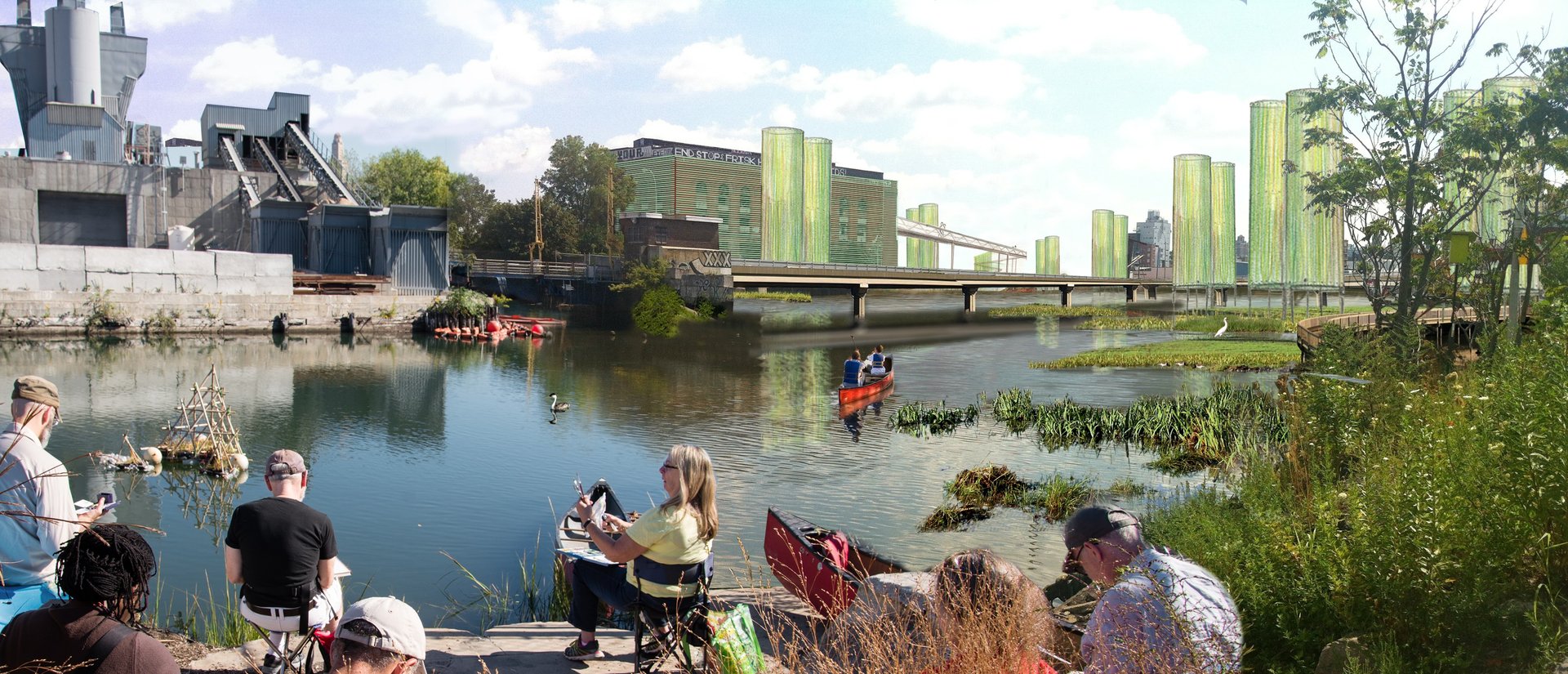
The Gowanus Algae Park proposes to redevelop the floodplain around the Gowanus Canal with a variety of algae farms, wetlands, and parks to mitigate the effects of flooding, purify the water, and reinvent the industrial character of the area.
The Context:
Hurricane Sandy dramatically exposed the faults of the New York's shoreline development: the Gowanus Canal was one of the most affected areas. Rethinking the interaction between the city and the sea will improve climate security allowing a more dynamic interaction between the urban environment and water fluctuations.
The Gowanus Canal in Brooklyn is locally renowned as one of the most polluted areas of the city. Decades of industries and obsolete sewage overflow made it into one of the most polluted waterways in the United States. In 2010 the canal was designated a Superfund Site, needing urgent clean-up.
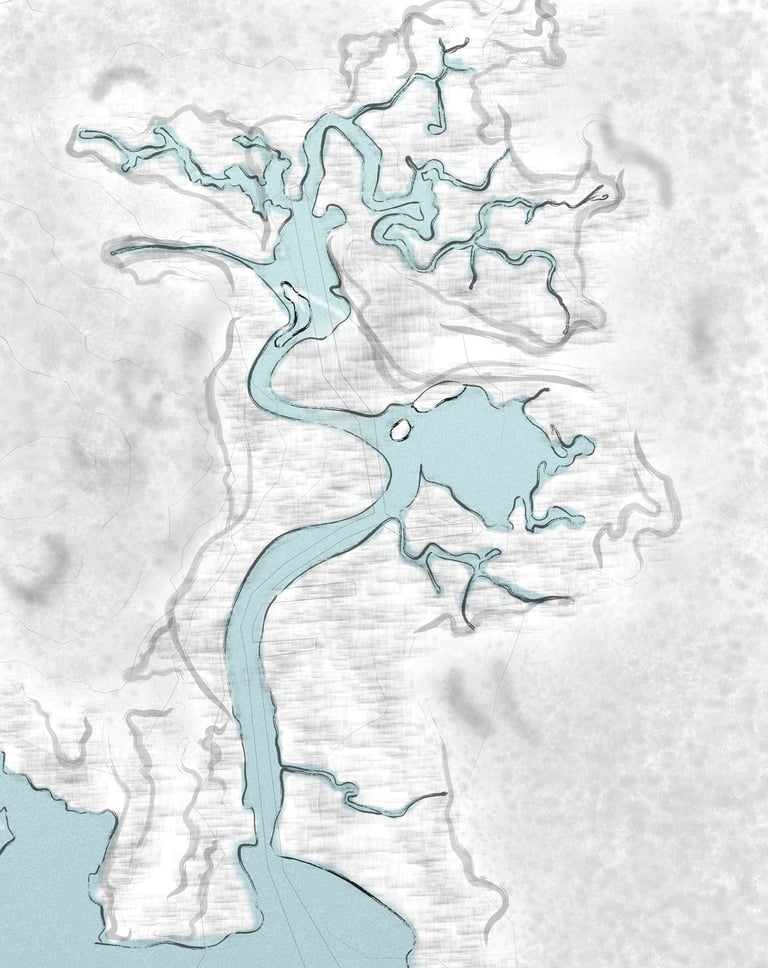
Before European colonization, Gowanus was a tidal inlet surrounded by wetlands. Over the past 300 years, intense urbanization transformed this aquatic ecosystem into a canal surrounded by coal warehouses, oil refineries, and other polluting factories that still contaminate the soil to this day.
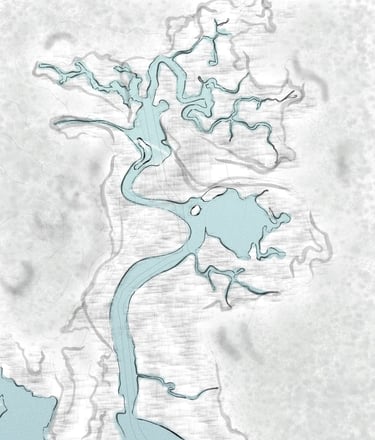
The site:
1607 - Boundary between land and water before European colonization. Soft edges allow for the natural fluctuations of water and promote a biodiverse environment for plants and wildlife
2013 - Boundary between land and water after industrialization. Hard edges restrict water movement and the current urban model limits biodiversity
Re-naturalizing the wetland in its pre-colonial state is anachronistic and naïve. The soil trapped in some of the banks is too polluted to clean without immense and costly engineering. Nevertheless, there is a need for a soft buffer zone that would allow for storm surges, and for facilities that clean the wastewater from the combined sewage overflows (CSO).
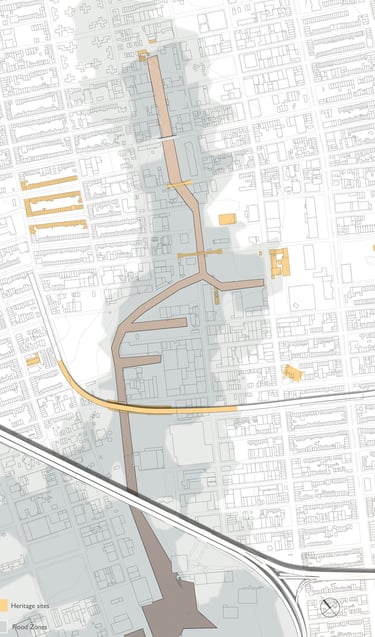
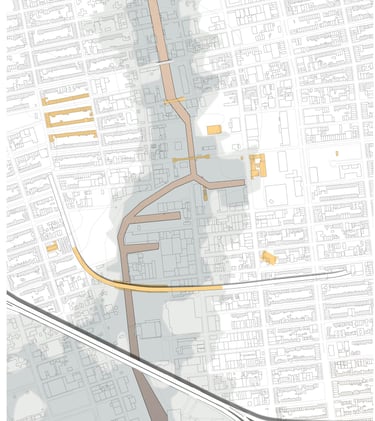
Analysis:
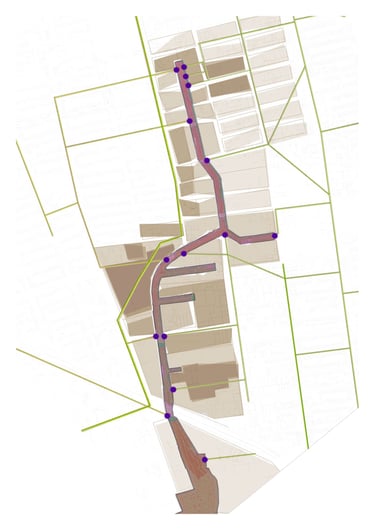
Soil pollution and sewage system
The obsolete water management dumps raw sewage into the canal making it one of the most polluted waterways in the United States. Ground pollution from coal warehouses, oil refineries and other factories still contaminates the soil.
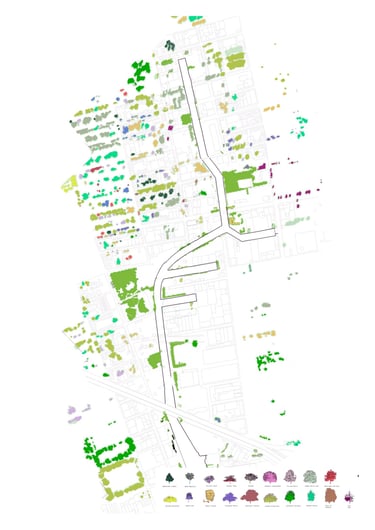
Current Vegetation
Planted trees comprise most of the neighborhood vegetation, but the area directly surrounding the canal is dominated by spontaneous sumac and pioneer shrubs
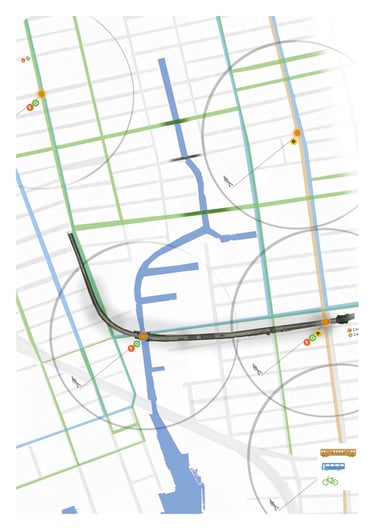
Public transit and active mobility
The neighborhood is well served by transportation, but the canal is generally 900m away from any subway stop.
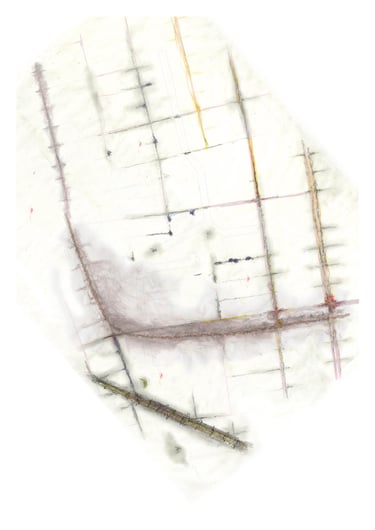
Soundscape
The noise and sounds from around the Gowanus, such as the elevated subway, the loading of scrap metal on barges, traffic, as recorded from experience and observation
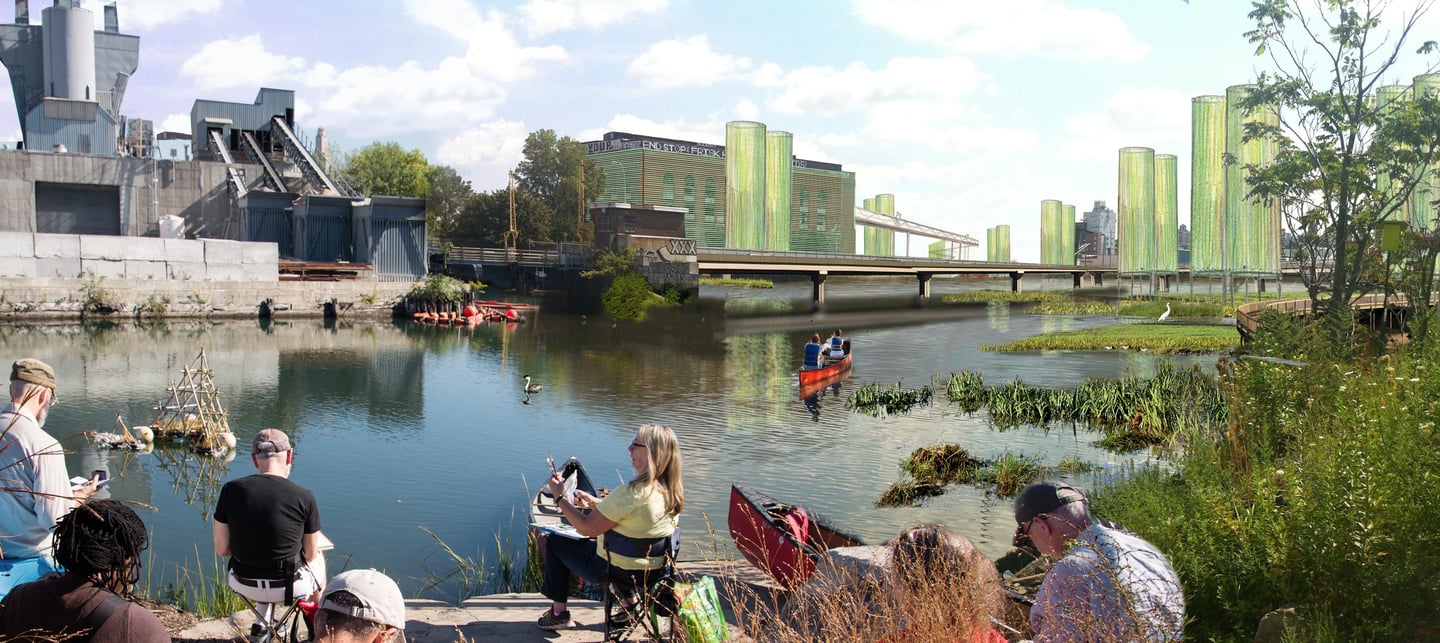
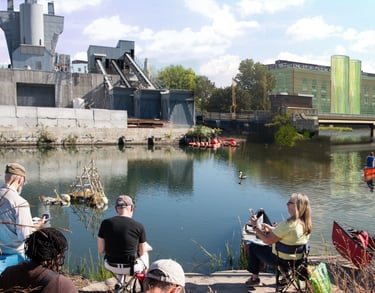
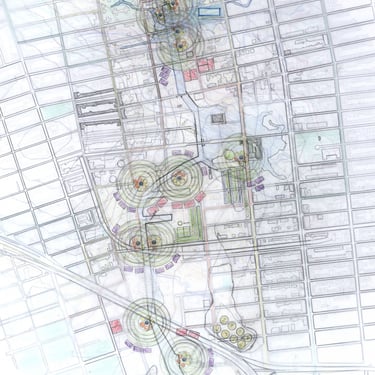
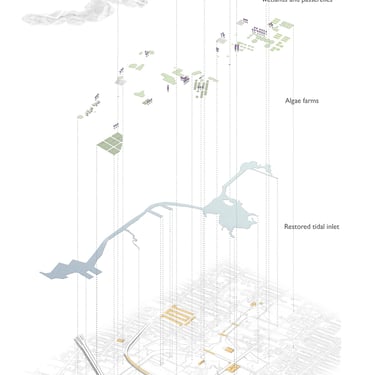
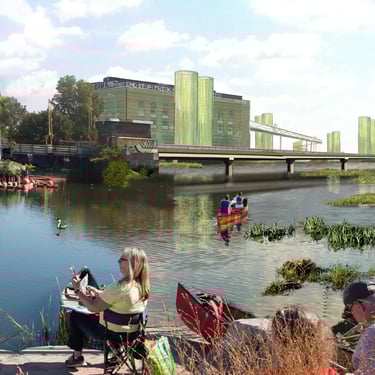
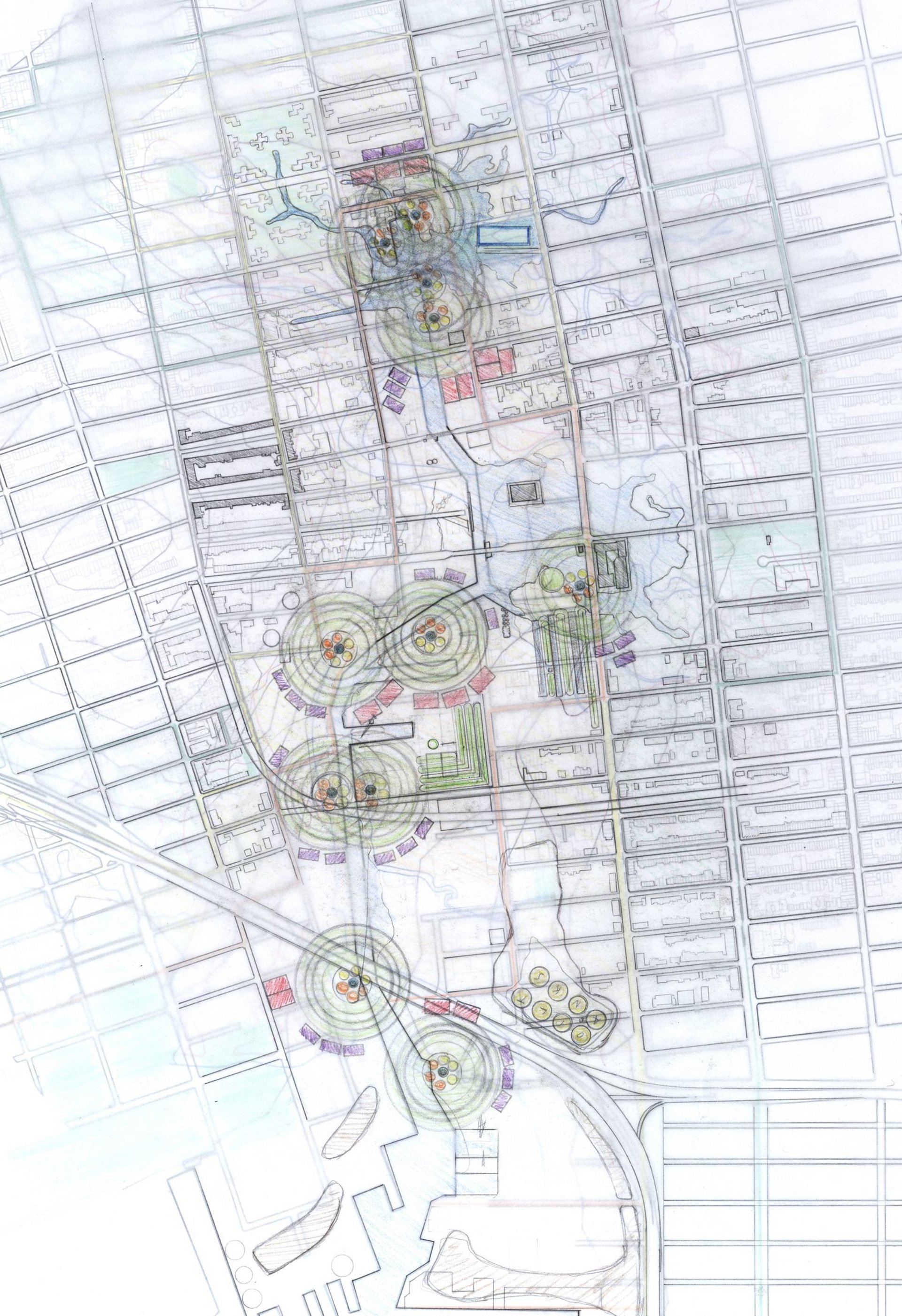
The Gowanus Industrial Algae Park proposes to maintain the impervious embankments in the areas with the most polluted soils, but to reestablish wetlands where feasible. The floodplain would host a variety of wetlands, algae farms and parks to mitigate the effects of flooding and purify the water, reinventing the industrial character of the area.
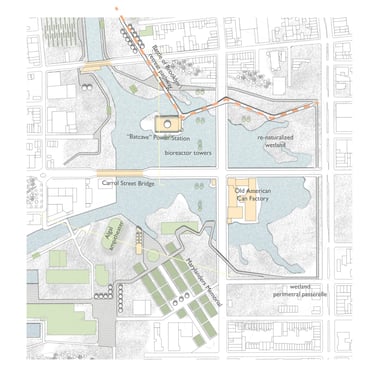
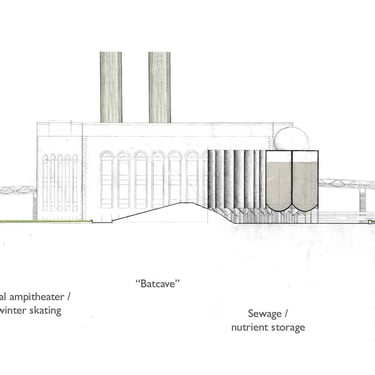
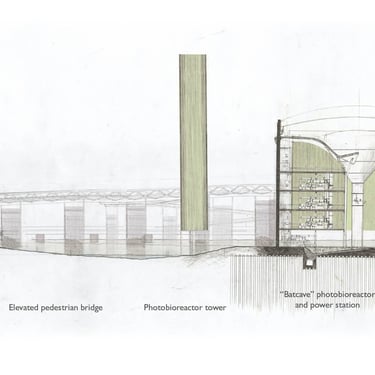
The algae farms are located at the CSO and collect the wastewater that is currently dumped in the canal into cisterns. The wastewater is used to feed the algae. As these plants grow in ponds, greenhouses and photobioreactors, they purify the water and produce biofuel. The clean water is reintegrated into the Gowanus ecosystem providing a safe habitat for coastal wildlife and migratory birds.
The design:
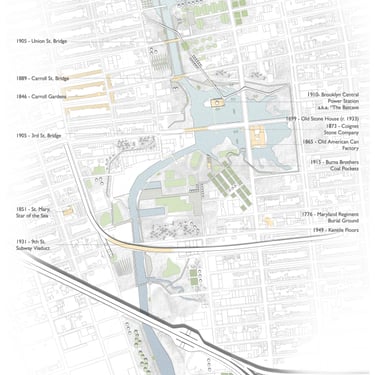
There are 11 algae farms along the Gowanus, one for each CSO. Each farm is composed of the same set of elements (tanks, ponds, presses, centrifuges). These elements are organized differently in each farm based on important events that took place in the neighborhood.
Each farm choreographs a particular story of Gowanus. The memory of the place is restated through the new infrastructure.
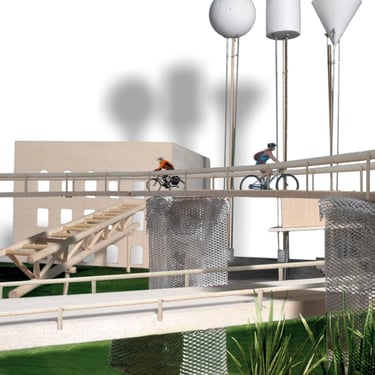
One farm commemorates the infamous Battle of Brooklyn of 1776: the path of retreat across the Gowanus is materialized into an elevated pathway.
Another farm is a monument to the 256 Marylander who gave their life in this battle and are buried in the neighborhood: 256 ponds and just as many trees become a cenotaph for the missing bodies.
Another farm remembers the Italian-American mobster scene of the time in which Al Capone used to call Gowanus his home: a little hidden path leads to a ledge on the canal with the sculpture of two cemented shoes.
The project intertwines landscape, history, architecture, and new industrial algal farms in a dialogue in which industry and the environment enhance each other.