L'Aquila Fenice
“The scar is a mark of pride, and of honor, both for what has been lost and what has been gained.”
- Lebbeus Woods
Year | 2014
Type | Research by Design
Phase | Concept
Size | 165 ha
Categories| Design, Fabrication
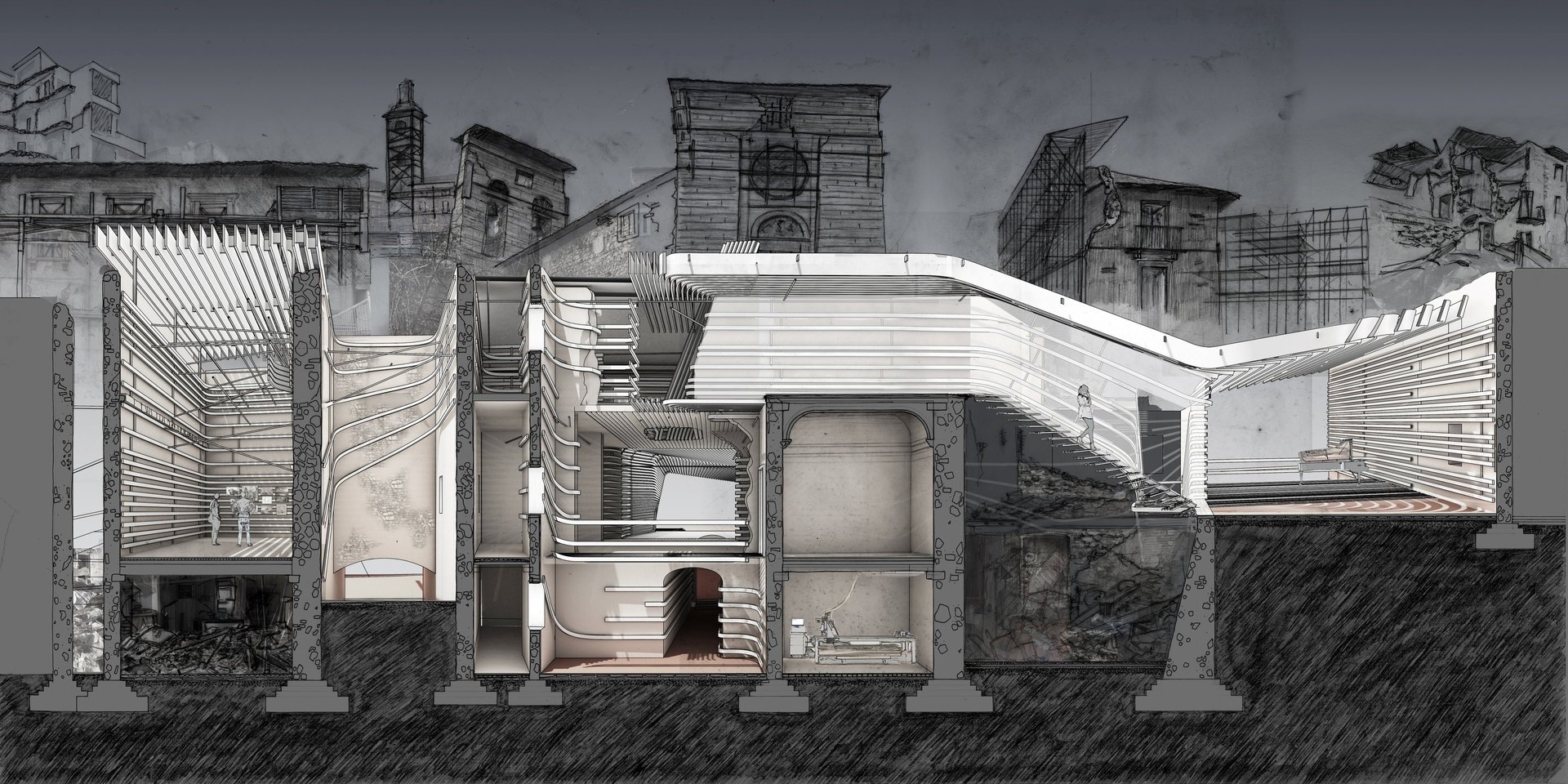
L'Aquila Fenice envisions a cultural and social reconstruction of the city, based on a grassroot movement where the community takes responsibility of its own destiny.
The Context:
Over the past 30 years Italy has been undergoing a crisis that is not only economic, but mostly social, cultural, ethical, and political.
The city of L’Aquila exemplifies this crisis. The earthquake that stuck the city in 2009 devastated the historic downtown, but the failed reconstruction is what really destroyed the city. The earthquake is not the cause of the crisis, but rather a catalyst that has exposed and accelerated the faults of the Italian system.
In Italy there is a need for a cultural, ethical, and social reconstruction. The reconstruction will start from the city where this degeneration has been the most evident.
Because of criminal interests of few, the downtown lies in a condition similar to that of April 2009. The scaffolding that was supposed to temporarily secure most of the buildings in the immediate aftermath, still denies public access, public space and public capital: rather than a temporary support it has become a crutch preventing the rehabilitation of the city. To re-inhabit the city, the current scaffolding needs to be eradicated.
Some have argued for reconstructing the city how it was, others for demolishing what is left and building from a tabula rasa. Both principles show a desire to return to a normalcy that is no longer possible and that hides the current destabilization. The earthquake and aftermath not only had personal psychological effects, but changed the social, political, and economic relationships. Furthermore, the city has been undergoing a crisis for the past two decades, and L’Aquila should seek for a new way of living that will give it a new energy. The reconstruction, thus, should acknowledge these changes, arise from the current condition, and create the spaces necessary for this new way of living.
The site:
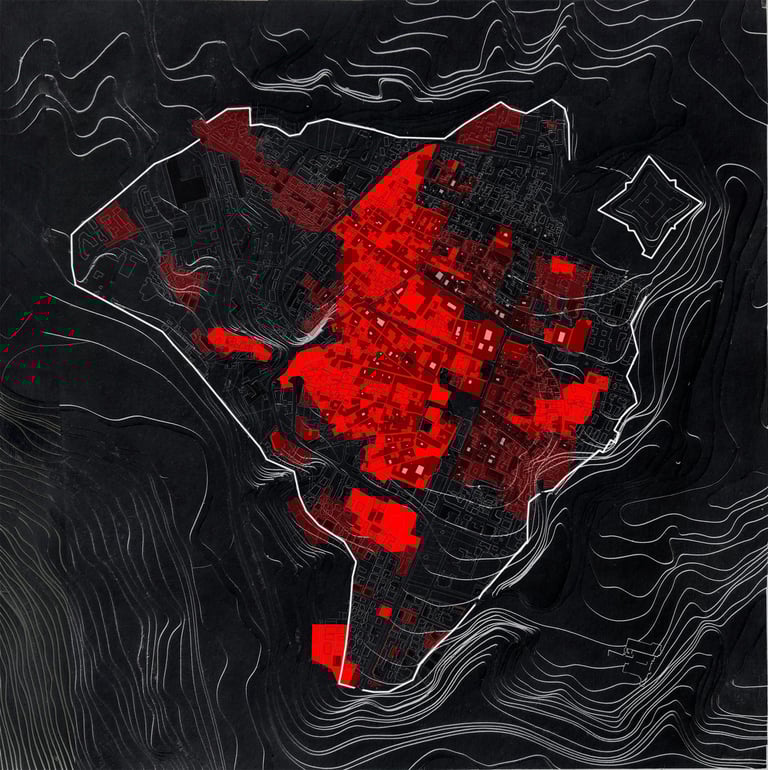
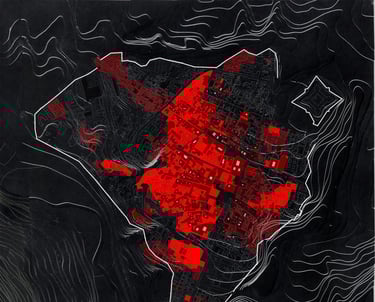
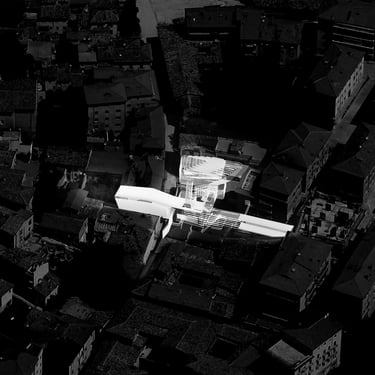
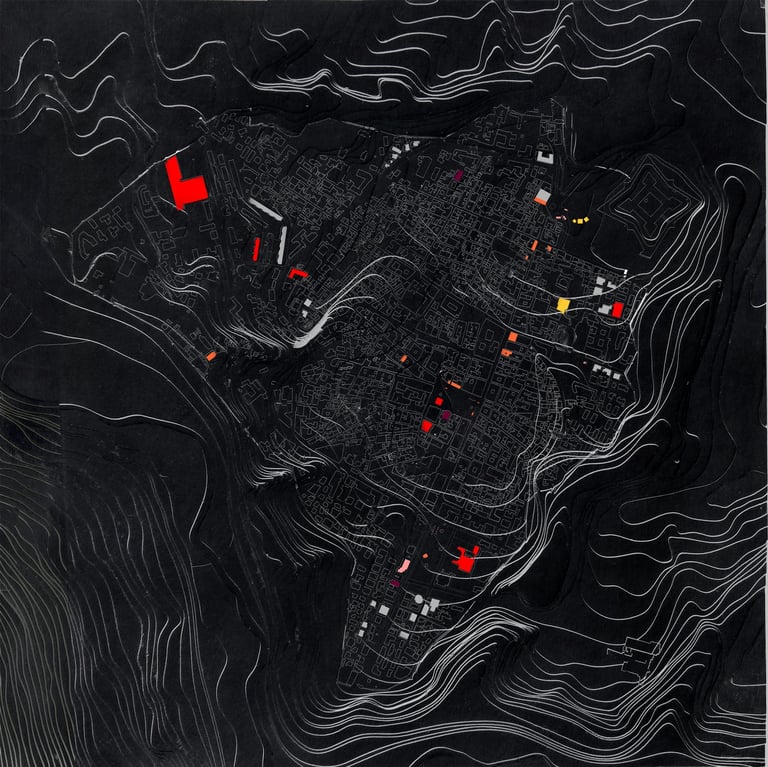
The city center of L’Aquila has been held hostage of corruption since an earthquake severely damaged the area in 2009. For the past five years the downtown has been militarized, fenced off, and mostly abandoned. Reconstruction has focused on creating new suburbs on fertile agricultural land. The “new towns,” as they are called, have further alienated the already troubled community by separating people and places, draining the energy of the city.
Because of criminal interests of few, the downtown lies in a condition similar to that of April 2009. The scaffolding that was supposed to temporarily secure most of the buildings in the immediate aftermath, still denies public access, public space and public capital: rather than a temporary support it has become a crutch preventing the rehabilitation of the city. To re-inhabit the city, the current scaffolding needs to be eradicated.
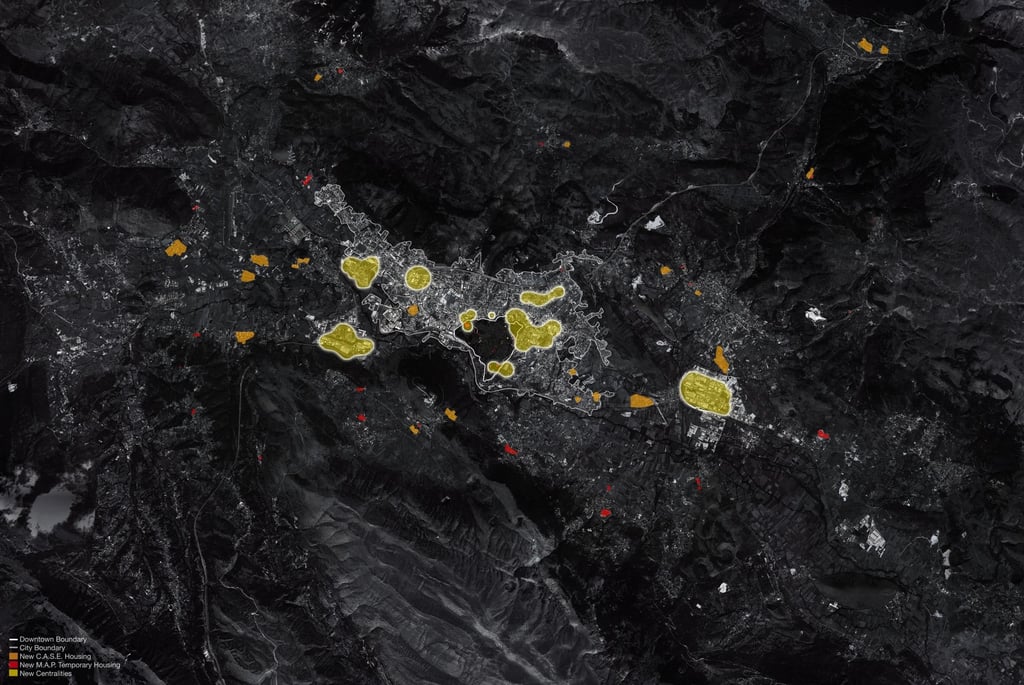
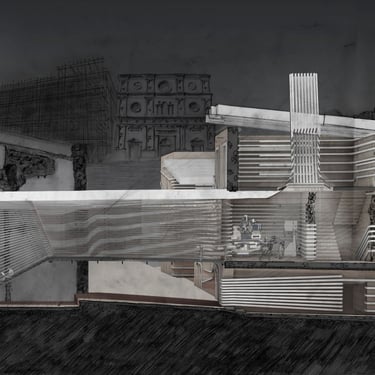
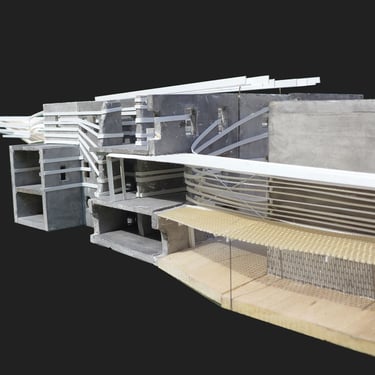
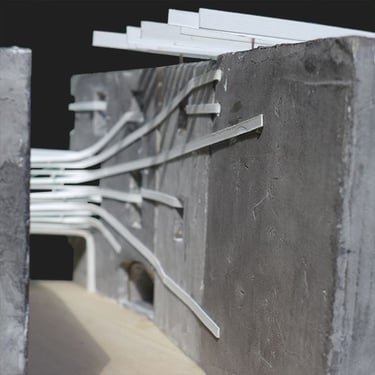
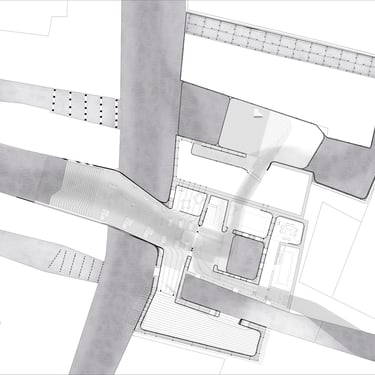
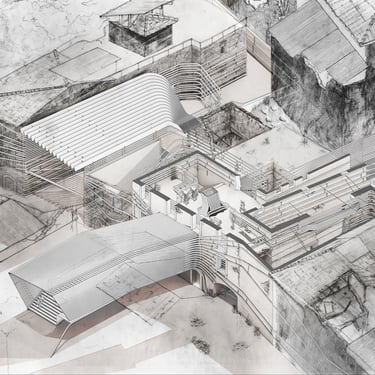
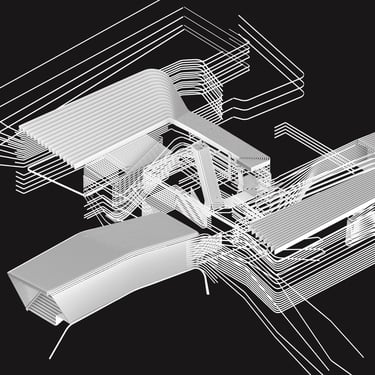
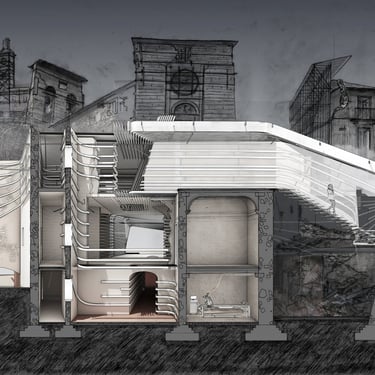
I propose a network of non-intrusive weaving supports that reorganizes the urban fabric and social structure of the dilapidated downtown. This new organization will provide public access and public spaces within the off-limits boundaries of the downtown. Like smoke seeping through crevices the supporting bands subvert the current fabric of the city by creating a network of new passageways and social spaces that inverts the distinction between previous public and private spaces.
The design:
For L’Aquila to thrive again,
the current corrupted structural system needs to be subverted and a new structural system needs to provide public access and public space to the people.
A grass-root infrastructure based in communitarian effort will create spaces that are constantly accessible for creative production and personal empowerment and provide social grounds for a meaningful future growth.
A network of shared facilities and equipment: a series of capillary entities that are interconnected as creative experimental businesses, research facilities and learning environments.
As the city gets rebuilt, these structures will become monuments to the earthquake and the mismanagement of the aftermath, and to the spirit of the people that took the fate of the city in their own hands.